
How to rinse rocks between tumbler stages 2026
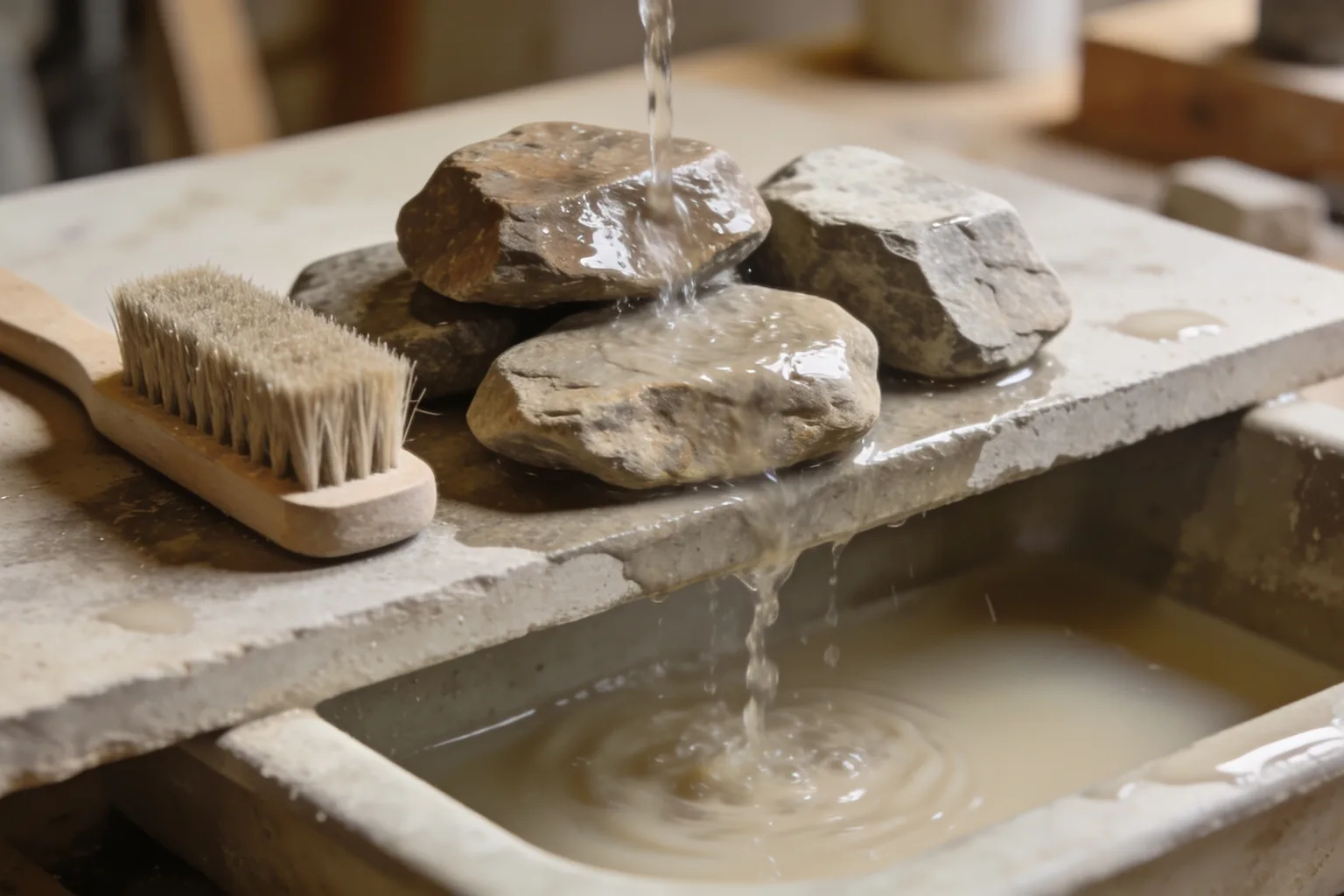
To move rocks into a finer grit stage, catch the slurry, rinse the wet stones, and brush pits and cracks before loading the next batch. This reduces grit carryover; letting slurry dry makes cleanup harder.
If you are also choosing equipment for a first setup, compare the starter options separately from this cleaning routine. Compare rock tumblers for beginners.
Rinse rocks without carrying grit forward
Work while the batch is wet, clean hidden spots, and check anything moving to the next stage.
Step 1 Set up to catch the slurry
- Place a colander or sieve over a bucket or dedicated container.
- Empty the barrel into the strainer, keeping the slurry and grit out of household drains.
Step 2 Rinse while the rocks are wet
- Rinse the rocks with clean water over the container.
- Keep the slurry from drying on the stones as you work.
Step 3 Brush pits and crevices
- Brush each rock, paying attention to pits, holes, and cracks.
- Use a spray bottle to direct water into stubborn crevices if helpful.
Step 4 Check media and the batch
- Rinse any media that will move to the next stage.
- Inspect the rocks and, after the first stage, set aside chipped pieces with sharp edges or breaks that can catch grit.
Step 5 Choose whether to add a wash cycle
- If you want an extra cleaning step, use a separate soap-and-water rinse run as an optional measure.
- Treat published soap amounts and run times as examples, not a universal procedure.
Result
You can add an extra step without treating it as necessary for every batch.
What should you do before the next grit stage?
Before the next grit stage, strain the batch over a bucket, rinse the wet stones, and brush pits, holes, and cracks. Rinse ceramic media if it is moving forward, then inspect the batch. This routine reduces grit carryover, especially from a coarse stage into a finer one.
What do you need for a careful rinse?
A colander or sieve over a bucket gives you a place to catch both the rocks and the grit-bearing rinse waste. Keep a dedicated toothbrush or nylon brush nearby, and use clean water. A spray bottle is optional for narrow cracks, but water can spray back toward you.
- A colander or sieve to hold the rocks
- A bucket or container to catch slurry and rinse solids
- Clean water and a dedicated toothbrush or nylon brush
- An optional spray bottle for cracks and other tight spots; expect some back-spray
- Media only if it is part of the batch or will move to the next stage
Blue Marble lists a strainer designed to hold an entire barrel’s capacity with its National Geographic Professional Rock Tumbler 2 Lb. That included accessory may be useful if you want a strainer with a tumbler kit, but it does not replace rinsing and brushing the rocks.
Our Top Picks
How do you rinse rocks between stages?
Set a bucket under the strainer before opening the barrel, then keep the rocks and rinse waste contained through cleanup. Follow the steps in order so you can inspect both the stones and anything else moving into the finer stage without rushing the hard-to-see spots.
Step 1: Set up to catch the slurry
Set a colander or sieve over a bucket, then empty the barrel into it. Catch the slurry and grit rather than letting them run down a household drain. Tumbling grit can settle in plumbing, so contain the initial dump and the rinse waste.
Step 2: Rinse while the rocks are wet
Rinse the rocks with clean water over your container. Move them around in the strainer so water reaches different sides, and do not leave slurry sitting on them to dry. Dried slurry can be tedious to remove, so clean the batch promptly.
Step 3: Brush the hiding places
Brush individual rocks, focusing on pits, holes, cracks, and other crevices. A spray bottle can direct water into stubborn spots, but watch for back-spray. Checking only the smooth faces can miss grit tucked into a small opening.
Step 4: Check media and remove chipped rocks
Rinse ceramic media as carefully as the rocks if it is moving to the next stage. Midwest Shores advises keeping plastic pellets separate by stage. After the first stage, set aside chipped stones with sharp edges or breaks: jagged spots can hold slurry and be harder to rinse.
Step 5: Decide whether to add a wash cycle
A soap-and-water rinse run is an optional extra, not a universal requirement. Sources describe different methods and durations, and do not establish one timing or soap amount for every tumbler. If you choose this step, treat published instructions as examples rather than assuming rotary and vibratory tumblers use the same procedure.
What can make a rinse ineffective?
A rinse can miss grit when slurry dries, a brush skips crevices, or media is forgotten. Check the whole batch and anything moving forward, and collect grit-bearing slurry and rinse solids instead of sending them down a household drain before starting the next grit stage.
- Letting slurry dry on the rocks: Rinse while the batch is wet so dried residue does not become harder to remove.
- Rinsing only visible faces: Brush pits, holes, and cracks where slurry can remain.
- Forgetting media: Rinse media moving to the next stage, and keep plastic pellets separate by stage.
- Treating one wash-cycle recipe as universal: Sources differ on soap and duration, so do not assume one procedure fits every tumbler.
- Pouring waste into a sink: Catch slurry and grit-bearing rinse solids in a container instead.
What if you still suspect grit is there?
If you suspect grit remains, stop before loading the next stage. Look for residue in rock crevices and on media, then rinse and brush again. Carryover can hurt a finish, but it is only one possible cause of a disappointing result.
Visible residue remains in a pit or crack
Slurry may still be lodged in a crevice. Rinse the spot again and brush it; a spray bottle can help direct water into a narrow opening. Recheck before moving on instead of assuming the outside of the rock is clean.
Slurry has dried onto the rocks
Dried slurry can be difficult to remove, and the supplied sources do not establish one recovery method for every batch. Inspect the rocks and clean away any remaining residue before starting the next grit stage; do not count on a quick rinse alone.
The next stage does not finish as expected
Grit carried over from an earlier stage is one possible reason for a poor finish, not a sure diagnosis. Check for residue in cracks, on media, or on stones before the next stage. If the batch is clean, consider other causes rather than repeating the rinse without a reason.
Related guides
- Rock tumbler barrel capacity vs rock weight 2026 — Rock tumbler barrel capacity vs rock weight: learn what the label means, how it differs from fill volume and rock-only weight, and what to verify in the manual.
- Blue Marble 2 lb tumbler review 2026 — This Blue Marble 2 lb tumbler review explains the Professional kit’s controls, included supplies, capacity caveat, and who may prefer a different setup.
- Why Won't My Rock Tumbler Barrel Turn 2026 — Why won't my rock tumbler barrel turn? Check power, seating, load and drive symptoms safely, then use your exact model's manual before repairs.
Frequently asked questions
Do I need soap to rinse rocks between tumbler stages?
No. The basic routine is to catch the slurry, rinse the rocks, and brush pits and crevices. A soap-and-water rinse run is optional. Sources give differing methods and durations, so they do not establish one required recipe for every tumbler.
How do I get grit out of holes and cracks in rocks?
Rinse the rocks while they are wet, then brush each hole or crack with a dedicated toothbrush or nylon brush. A spray bottle can help direct water into a narrow spot. Check again before moving the rocks to the next grit stage.
Can I rinse tumbler slurry down the sink?
No. Catch the slurry and grit-bearing rinse waste in a bucket or other container instead of sending it down a household drain. Tumbling grit can settle in plumbing, so contain both the initial barrel dump and the rinse cleanup.
Should ceramic or plastic media be rinsed between stages?
Rinse ceramic media if it is moving to the next stage, just as you rinse the rocks. Midwest Shores advises keeping plastic pellets separate by stage rather than transferring them. Check what is going into the next batch.