
Choosing a rock tumbler for mixed hardness rocks 2026
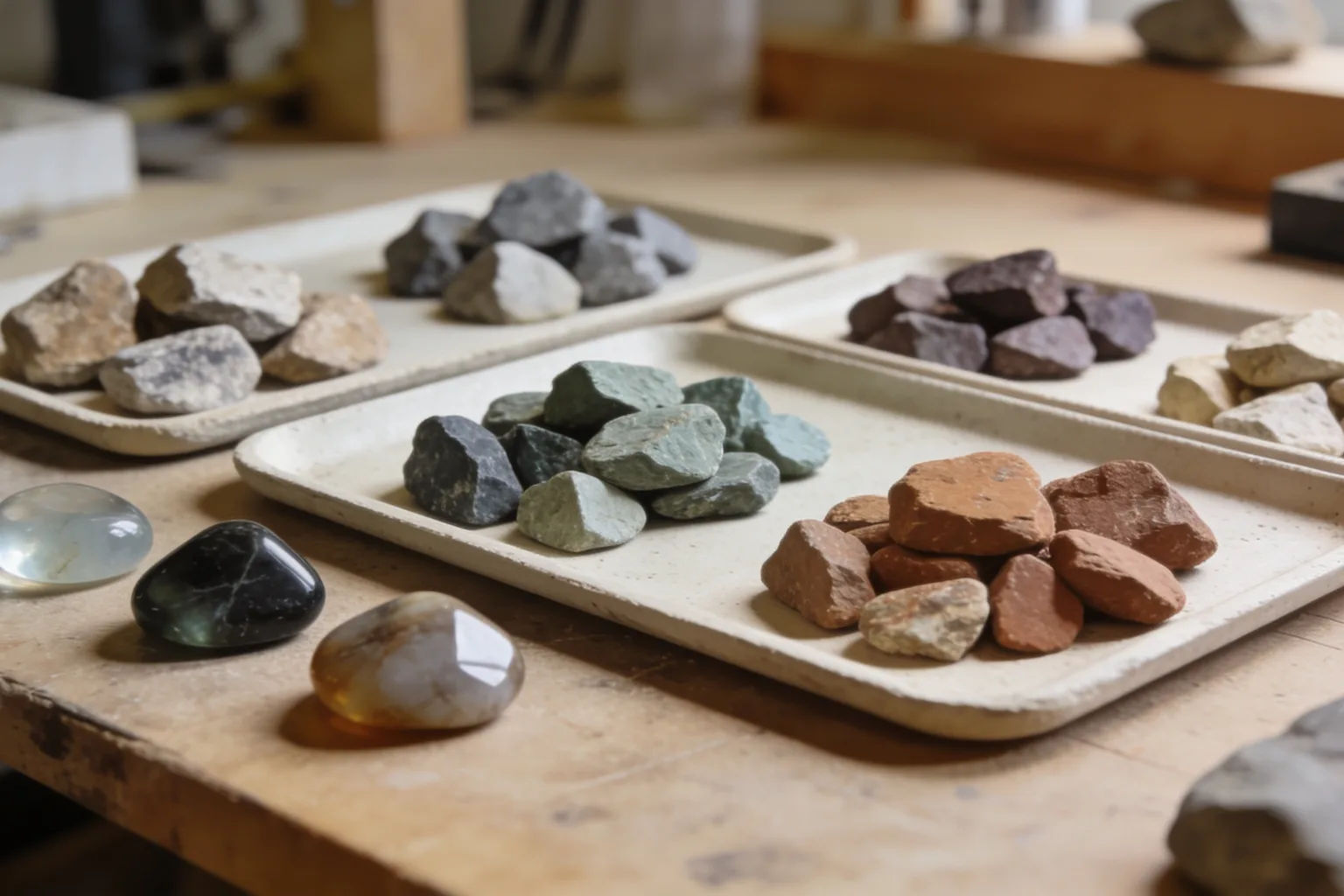
Sort your rocks into compatible batches before choosing a tumbler. No machine type or setting makes a mismatched load polish evenly, so choose equipment for the batches you can run separately and check the exact model’s loading instructions.
Once you have sorted your rocks into batches, compare the machine options and their documented features. Compare the best rock tumblers for beginners.
Does rotary or vibratory motion suit mixed rocks?
Neither motion fixes a hardness mismatch. Rotary tumblers turn a barrel and gradually round stones; vibratory models move stones through faster vibration and tend to preserve their shapes. Choose based on the finish and pace you want, then keep each load to rocks of compatible hardness.
Rotary
Motion and typical result: A slowly turning barrel rounds edges over a longer run. May suit you if: You want rounded stones and can be patient.
Vibratory
Motion and typical result: A vibrating bowl tends to work faster and preserve more of each stone’s shape. May suit you if: You want to keep more of the original outline and can follow the instructions closely.
Rotary tumblers
For a first tumbler, I’d choose rotary if rounded stones are your goal. A beginner guide describes rotary tumbling as slower and more forgiving, but it still requires compatible rocks in each batch.
Vibratory tumblers
Choose vibration when preserving a rock’s outline matters more than rounding it. The guide describes vibratory tumblers as faster but less forgiving, so they are not a shortcut for combining rocks that should be sorted apart.
What matters most when rocks vary in hardness?
Plan your batches first, then match the machine to how you expect to run them. Harder stones can scratch and wear softer ones, causing uneven results; controls, a bigger barrel, or a different motion do not replace sorting. Check the exact model’s loading directions and stated limits before you buy.
Sort rocks and plan separate batches
Group stones that are close in hardness, and set aside pieces that are clearly softer or uncertain. One rock-tumbling guide advises against mixing stones more than roughly one Mohs point apart. Treat that as a practical sorting guideline, not a guarantee for every specimen; fractures and texture can affect a batch too.
The Mohs scale compares how easily materials scratch one another. If you cannot identify a stone confidently, keep it separate from familiar, harder material until you can identify it using a reliable source. A tumbler cannot make an unknown stone compatible.
Choose a motion you can manage
Pick rotary or vibratory motion for the shape and pace you want, not to compensate for different hardnesses. If your collection has both soft and hard stones, plan separate runs when needed. Neither type makes those materials wear at the same rate.
Check barrel size and loading instructions
A stated barrel capacity and a rock-only load limit are different figures. A maker may list the barrel’s capacity and separately state how much rock it can hold. Do not treat those numbers as interchangeable or borrow a limit from another model; check the exact listing and manual.
General tumbling guides describe filling a rotary barrel about two-thirds to three-quarters full, often with a mix of rock sizes or media to fill gaps. That is general guidance, not a rule for every machine. Follow the model-specific directions for fill level, rock weight, and media.
Check useful controls and supplies
A timer can help you follow a schedule, and adjustable speeds offer options when a model provides them. These controls can help you manage separate runs, but they do not make a mismatched batch suitable. Check the exact listing and manual to see which controls are included and how the maker says to use them.
If you expect to run several hardness groups, you will repeat the stages for each compatible batch. Check what grit, media, and other supplies the kit includes, and whether replacement parts are available for the exact model. Do not assume every kit contains the same items.
How should budget shape your choice?
Choose features you will use, not the hope that extra power or settings will fix mixed hardness. The supplied evidence does not establish price ranges or a dependable pattern of features by tier. Compare each model’s kit contents, capacity wording, instructions, controls, and replacement supplies instead.
Entry-level
Keep the checklist simple: confirm the tumbler type, what comes in the kit, and how the maker describes its capacity. A basic setup can make sense if you are starting with one sorted batch. Check whether the included grit is enough to begin and what supplies you would need for later runs.
Midrange
Compare controls and kit contents against your routine. A timer may help you manage stage lengths, but additional speed settings are useful only if the instructions explain when to use them. Verify whether a capacity figure means barrel size or a stated rock-only maximum.
Premium
Check each advertised feature rather than assuming a higher price guarantees a better polish. A brushless motor, noise-reduction design, extra controls, or a larger stated load may matter to your setup, but none replaces compatible batches. Confirm the specific model’s limits and included supplies.
What buying and batch mistakes should you avoid?
Avoidable disappointment often starts before the barrel runs: incompatible rocks share a batch, or a specification is assumed to mean more than it says. Keep your focus on compatible material and the exact machine’s instructions. These mistakes can waste a run or damage stones.
- Expecting one barrel to polish rocks of widely different hardness evenly. Separate clearly softer stones instead of hoping the tumbler will compensate.
- Treating barrel capacity as the maximum weight of rocks. Look for a separate rock-only limit, and do not infer one when the listing leaves it unclear.
- Assuming a timer, speed setting, or vibratory motion fixes a mismatch. Those features do not make harder and softer rocks compatible.
- Putting porous, fractured, or fragile pieces into a good batch. Pores can trap grit, and weak or cracked stones may break down and interfere with polishing.
Which models have features worth comparing?
These options have documented features that may help you manage separate, compatible batches. None makes rocks of mismatched hardness suitable for one load. Check the exact model information before loading, especially when capacity wording is unclear.
The National Geographic Professional Rock Tumbler 2 Lb has a manufacturer-listed 2-lb barrel capacity, a timer up to 12 days, and three speeds. Blue Marble lists 1 lb of rough rocks and four grit bags in the kit; its supplied information does not give a separate rock-only maximum, so do not treat the barrel figure as one.
KomeStone lists a digital timer, adjustable speeds, and a memory feature for the KomeStone K1 Rock Tumbler. The listed 2.5-lb capacity is not defined as barrel capacity or a rock-only maximum, so check the exact model’s instructions before deciding how much rock to load.
The maker describes the KomeStone K2 Brushless Tumbler as having a 3-lb barrel and separately states a 3-lb rock limit. Its kit includes 1 lb of rough rocks, four grits, an extra belt, and an instruction book; those features do not make incompatible rocks suitable for one batch.
Related guides
- Rock tumbler barrel capacity vs rock weight 2026 — Rock tumbler barrel capacity vs rock weight: learn what the label means, how it differs from fill volume and rock-only weight, and what to verify in the manual.
- Blue Marble 2 lb tumbler review 2026 — This Blue Marble 2 lb tumbler review explains the Professional kit’s controls, included supplies, capacity caveat, and who may prefer a different setup.
- Why Won't My Rock Tumbler Barrel Turn 2026 — Why won't my rock tumbler barrel turn? Check power, seating, load and drive symptoms safely, then use your exact model's manual before repairs.
Frequently asked questions
Can a rock tumbler polish rocks with different hardnesses in the same barrel?
Only when the rocks are close enough in hardness to wear at a similar pace. Harder stones can scratch and wear softer ones, leading to uneven results. Sort clearly different materials into separate batches; changing tumbler type or controls does not remove that mismatch.
How close should rocks be in hardness before tumbling them together?
One guide advises keeping rocks within roughly one Mohs point of each other. Use that as a practical sorting guideline, not a guarantee for every stone. Fractures, porosity, and other material differences can also affect whether pieces make a suitable batch.
Should I choose a rotary or vibratory tumbler for mixed rock collections?
Choose based on the shape and pace you want, then sort the collection into compatible batches. Rotary tumblers round stones more slowly; vibratory models are described as faster and more shape-preserving, but less forgiving. Neither type makes mixed hardness polish evenly together.
Is barrel capacity the same as the maximum weight of rocks?
Not necessarily. A manufacturer may list a barrel capacity and a separate rock-only limit, and those figures are not interchangeable. Check the exact model’s listing and manual. If the rock limit is not stated, do not infer it from the barrel rating.
What should I do with rocks whose hardness I cannot identify?
Keep uncertain rocks separate from a batch of familiar material until you can identify them using a reliable source. Do not use a valuable specimen as a test piece. Inspect each rock for deep fractures or pores that could trap grit or shed debris during tumbling.