
Why Do Rocks Crack in a Rock Tumbler? (2026)
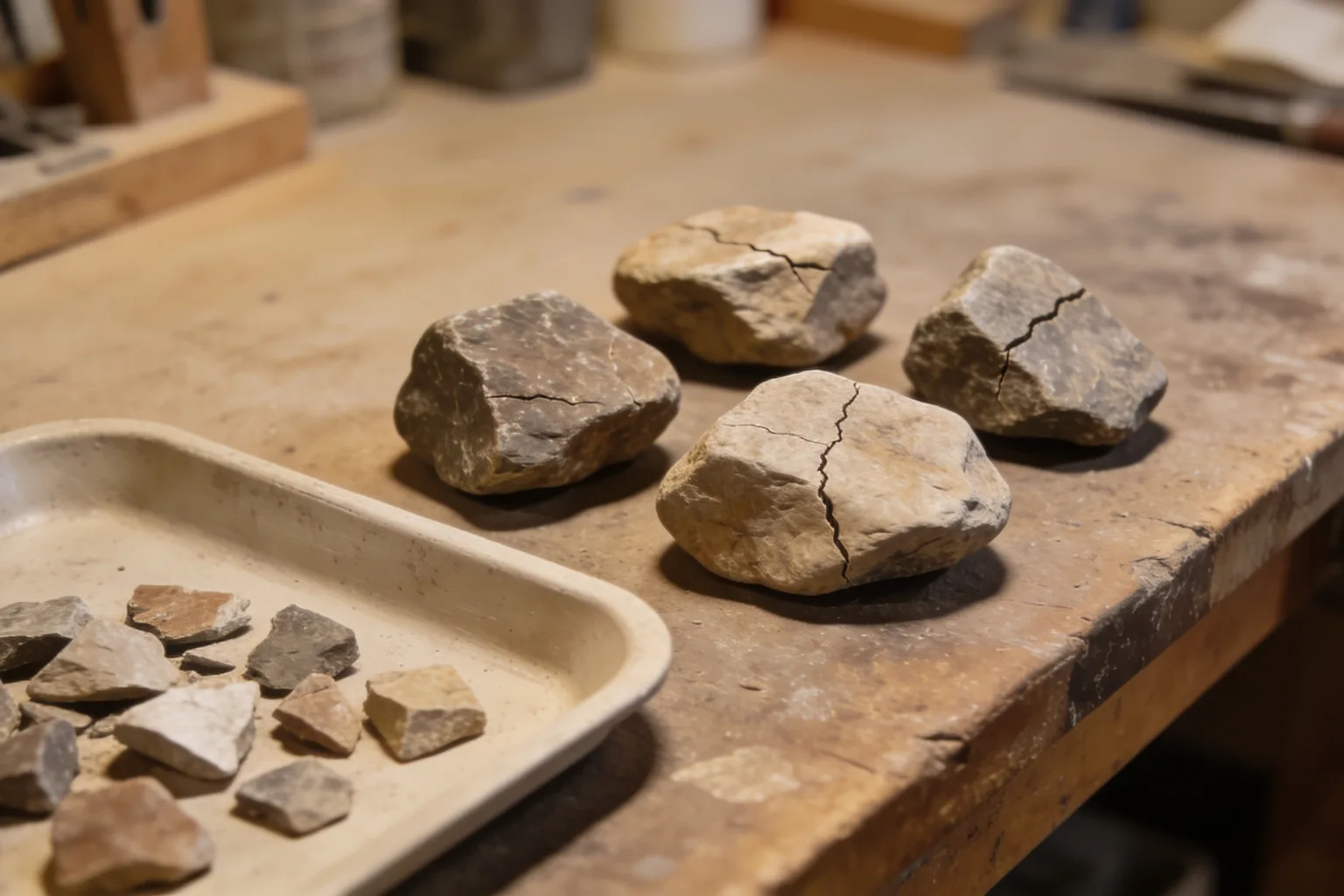
If rocks crack in a tumbler, pause the run, remove fractured stones and fragments, and inspect the remaining load before restarting. This helps protect sound stones without guessing at a cause the crack alone cannot reveal.
If you are comparing machine features, use the roundup for context. A different tumbler is not a fix for fractured rough. Compare beginner rock tumblers and their features.
Check the stones and barrel before restarting
Use these five checks to remove avoidable risks without guessing at a cause the evidence cannot confirm.
Step 1 Pause and inspect the batch
- Stop the tumbler and move the stones to a clean tray or bucket.
- Rinse muddy stones in a colander over a bucket, and wear safety glasses.
- Look for cracks, broken pieces, and loose fragments.
Step 2 Remove cracked or broken stones
- Set aside any visibly fractured stone and remove every broken piece.
- Keep suspect stones separate from sound rough instead of testing them in the same batch.
Step 3 Review the remaining rocks
- Sort for similar hardness and, where practical, similar rock types.
- Remove porous, brittle, or visibly fractured rough that could break or shed grains.
Step 4 Check the barrel fill
- Compare the load with the fill guidance in your exact tumbler’s manual.
- Add suitable rocks or ceramic media only if the manual allows it.
Step 5 Clean and restart cautiously
- Clean the barrel, lid, tools, and remaining stones thoroughly before restarting or changing stages.
- Continue only with sound stones and the settings in your tumbler’s manual.
Result
What should you do when rocks crack?
Pause the batch, separate damaged stones from sound ones, and check the barrel fill against your tumbler’s manual. A crack may have been hidden before the run or become visible during it; the crack alone does not establish when it formed or what caused it.
What do you need to inspect a batch?
Use a clean tray or bucket, a colander, safety glasses, and the manual for your exact tumbler. A bucket catches grit and muddy rinse water instead of sending it down a drain. Ceramic media is an option only if the manual allows it and the load needs added volume.
- Clean tray or bucket for sorting stones
- Colander for rinsing
- Safety glasses
- Your tumbler’s manual
- Clean barrel and lid
- Ceramic media, if permitted by the manual
If you want a packaged beginner batch instead of reusing questionable rough, the manufacturer lists one-half pound of rough rocks and four grit levels in the National Geographic Hobby Rock Tumbler Kit. It is a kit option, not a fix for cracking, and the available information does not establish that its included rocks are fracture-free.
Our Top Picks
How do you check the stones and load?
- Pause and inspect the batch. Stop the tumbler, move the stones to a clean tray or bucket, and look for cracks, broken pieces, and loose fragments. Rinse muddy stones in a colander over a bucket, not a drain, and wear safety glasses.
- Remove cracked or broken stones. Set aside visibly fractured stones and remove broken pieces rather than tumbling them with sound rough. Fractured rocks can break during tumbling and scratch other stones.
- Review the remaining rocks. Sort for similar hardness and, where practical, similar rock types. Remove porous, brittle, or visibly fractured rough that could break or shed grains.
- Check the barrel fill. The Rock Tumbler Instructions for 2- and 3-pound rotary barrels describe a fill of about 1/2 to 2/3 full. Treat that as guidance for those instructions, not a universal setting; follow your own tumbler’s manual.
- Clean and restart cautiously. Clean the barrel, lid, tools, and remaining stones thoroughly before restarting or changing stages. Continue only with sound stones and the settings in your tumbler’s manual.
Which mistakes make cracking harder to diagnose?
Avoid changing several things at once or treating a crack as proof that one setting caused it. First remove fractured stones and fragments, then check the remaining rough and barrel fill against your machine’s instructions.
- Leaving fragments or grit behind: remove broken pieces and clean the stones, barrel, lid, and tools thoroughly between stages. Debris carried into a later stage can scratch stones.
- Continuing with visibly fractured rough: fractured rocks can break during tumbling and scratch other stones. Keep them out of a batch with sound rough.
- Blaming speed, mixed hardness, or a particular polishing stage without evidence: the crack alone does not establish any of these as the cause. Follow your exact machine manual.
- Treating one fill level as universal: check your tumbler’s own instructions before adding rocks or media.
What should you check for different crack patterns?
A crack’s timing can guide what you inspect next, but it cannot prove why a stone failed. Separate suspect material and check the load, then keep the cause uncertain if the evidence does not narrow it down.
The crack was visible before tumbling
A visible fracture identifies a weakness, but it does not tell you when the crack formed or whether the stone will break. Set the stone aside or keep it separate from sound rough. The Rock Tumbler Instructions advise discarding fractured rocks or separating them along the fracture before loading.
A stone is broken after a run
The fracture may have been hidden, or the stone may have broken during tumbling; appearance alone may not distinguish the two. Remove the pieces and inspect the rest of the batch. Rinse muddy material over a bucket, not a drain, and wear safety glasses.
More stones break after you remove suspect pieces
Repeated breakage does not identify a single cause. Recheck the remaining rough for fractures or brittle, grain-shedding material, verify the fill against your exact manual, and sort for similar hardness and rock type. The cited instructions describe those similarities as helpful for consistent tumbling and diagnosis, not proof that a mismatch caused the cracks. Do not change speed or grit without model-specific guidance.
Related guides
- Why Does My Rock Tumbler Keep Stopping in 2026 — Why does my rock tumbler keep stopping? Separate power loss from a stalled barrel, check safe basics, and know when to contact the manufacturer.
- How to prepare rocks for tumbling 2026 — How to prepare rocks for tumbling: inspect cracks and voids, sort by type and hardness, and check size against your tumbler before choosing a batch.
- Best rock tumblers for small batches 2026 — Best rock tumblers for small batches 2026: compare barrel size, controls, and kit contents, with notes on uncertain capacity and model identity.
Frequently asked questions
Can a rock with a small crack still go in a tumbler?
A small crack does not show how stable the stone is. Fractured rocks can break during tumbling and scratch other stones, so set it aside or tumble it separately. Do not assume tumbling will close or repair the fracture.
Should I remove the rest of the batch if one rock breaks?
No, you do not automatically need to discard sound stones. Pause, remove the broken stone and fragments, and inspect the remaining rocks and barrel fill before restarting. Clean the stones and equipment thoroughly so leftover grit and debris do not carry into another stage.
Can an underfilled tumbler cause rocks to crack?
An underfilled barrel can toss rocks and damage fragile materials such as quartz, according to the cited rotary-tumbler instructions. That does not prove a low fill caused a particular crack. Check your own manual’s fill guidance rather than treating one fill level as universal.
Should I change tumbler speed if rocks keep breaking?
Do not change speed based on cracking alone. Recheck the stones for fractures, review the rock selection, and verify the barrel fill first. Then follow the instructions for your exact tumbler; the available evidence does not establish a universally safe speed or a speed-based diagnosis.