
Why Are Rocks Still Rough After Tumbling? 2026
If your tumbled rocks still feel rough, rinse a few and identify the defect before adding grit or polish. Sharp edges usually need more shaping; scratches, pits, and a smooth matte finish point to different fixes.
If the surface diagnosis suggests changing tumbler format rather than correcting a stage, compare the options before replacing equipment. Compare rotary rock tumblers for hobbyists.
Diagnose the surface before changing stages
Check a few clean stones, identify the defect, and repeat only the stage that fits.
Step 1 Rinse and inspect a sample
- Rinse several stones so slurry does not hide the surface.
- Look for sharp edges, rough patches, fine scratches, pits, or a smooth but matte finish.
Step 2 Check the shaping
- Look for sharp edges, grooves, or shaping marks that remain.
- Return affected stones to the coarse stage; do not assume every pit is removable, since cracks and holes can trap grit.
Step 3 Look for grit and damaged stones
- Check stones for cracks, holes, grit residue, or material that sheds particles.
- Clean the stones, barrel, lid, and edges before moving to finer stages.
Step 4 Check the load and rock mix
- Confirm the load has room to tumble and the rocks are reasonably compatible.
- Follow your tumbler’s instructions for loading and grit amounts rather than using a universal figure.
Step 5 Repeat only the indicated stage
- Match the stage to the defect, and remove the source of scratches before repeating finer stages.
- Inspect the stones again before advancing; smooth, matte stones do not automatically need coarse grit.
Result
What should I do first when rocks are still rough?
Rinse a few stones and inspect them under good light. Sharp edges and uneven shaping marks usually call for more coarse work, while fine scratches suggest contamination or a damaged stone. If a stone feels smooth but looks matte, check the fine stages and rock material instead of sending it back to coarse grit by default.
What do I need to check the batch?
Gather a rinse container, a brush for the stones and barrel, the right stage grit, and your tumbler instructions. Wear a dust mask when handling dry grit. Follow your machine’s guidance for its load and grit amounts, since those details are not universal.
- Bucket or another suitable rinse container
- Brush reserved for the rocks and tumbler barrel
- The grit for the stage you may need to repeat
- Your tumbler’s loading and grit instructions
- Dust mask for dry grit
If you are missing the right stage grits, the National Geographic Hobby Rock Tumbler Kit includes grit stages and a sifter. It can help replenish supplies, but it will not correct contamination or an unfinished stage. For other bundled options, compare rock tumbler kits that include grit.
Our Top Picks
How can I diagnose and correct a rough batch?
Start with a clean sample, then match what you see and feel to the stage that can address it. These five checks help separate unfinished shaping from scratches, grit contamination, and a smooth but dull surface, so you can avoid repeating the wrong step.
- Rinse several stones and inspect them under good light. Look for sharp edges, uneven patches, fine scratches, pits, or a smooth matte surface; slurry can hide the defect, so rinse first.
- Check whether shaping is finished. If sharp edges, grooves, or other shaping marks remain, return only those stones to the coarse stage. Treat cracks and holes differently because they can trap grit.
- Inspect the stones and barrel for residue, cracks, holes, or gritty material that may shed. Clean each stone, the barrel, lid, and edges before finer stages, and remove suspect stones that could carry or release grit.
- Check that the load can tumble and that the rocks are reasonably compatible. Consult your tumbler’s instructions rather than applying one fill amount to every machine; loading guidance depends on the tumbler.
- Repeat only the stage indicated by the surface. For scratches, remove the contamination source and repeat the necessary finer stages. For smooth, matte stones, check the fine stages or consider burnishing only after confirming the surface is clean and scratch-free.
What mistakes can leave stones rough?
Problems often start when stones move forward before shaping is done or when grit from an earlier stage reaches a finer one. Inspect stones individually, clean the barrel and lid between stages, and do not mistake a dull look for tactile roughness.
- Moving stones on with sharp edges or grooves: return stones with unfinished shaping to the coarse stage before using finer grit.
- Rinsing without scrubbing: grit can remain on stones or in barrel edges and scratch the next stage. Rockhound Resource’s cleaning guidance also advises cleaning stones and the barrel between stages.
- Keeping cracked, holey, or gritty stones in a fine-stage batch: remove stones that may trap grit or shed particles before they affect the rest.
- Sending smooth, matte stones back to coarse grit automatically: matte appearance is not the same as tactile roughness, and coarse grit can create new scratches.
What does each rough-looking finish suggest?
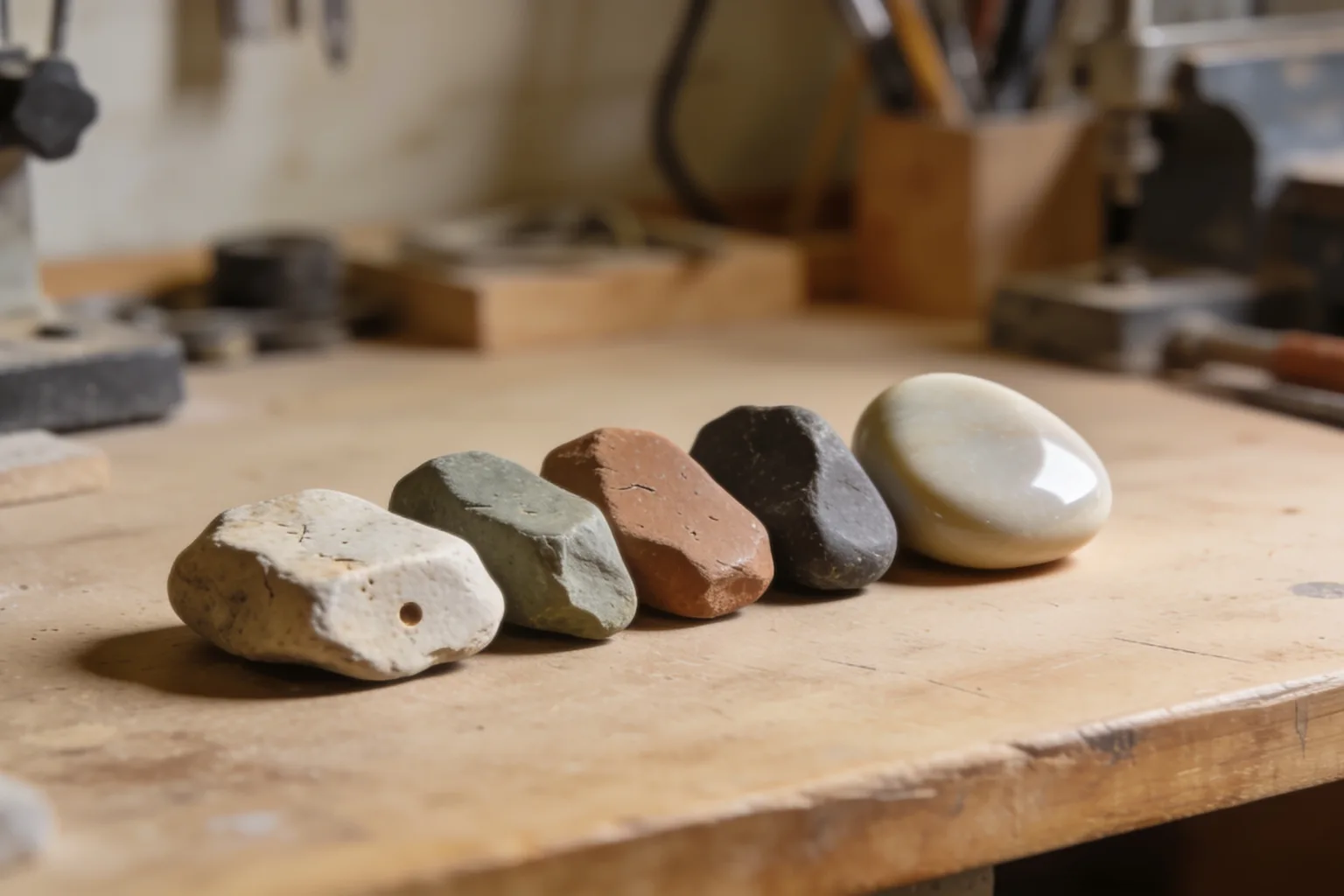
Use the surface as a clue before choosing a fix. Sharp edges, visible scratches, pits, and a smooth matte finish do not call for the same stage. Check the likely cause before adding grit or restarting a stage.
Sharp edges or obvious uneven patches
These usually mean shaping is unfinished. Return the affected stones to the coarse stage and inspect them again before moving them forward. Fine grit or polish will not efficiently remove major shaping marks.
Fine scratches on the surface
Suspect grit carried into a finer stage or a cracked or shedding stone. Clean the stones and barrel thoroughly, remove the likely source, and repeat the necessary finer stages. If mixed or unsuitable rocks may be contributing to uneven wear, see the guide to sorting rocks by hardness.
Pits or grainy, crumbling areas
Check for cracks, trapped grit, or a stone that sheds gritty material. Remove suspect stones before fine stages. Some rock material may not take a high gloss even with careful tumbling, so more time is not always the answer.
Smooth but matte stones
Do not send these back to coarse grit by default. Check whether the fine stages were completed and whether contamination or residue affected the finish. A final burnishing step may brighten a clean, smooth batch, but it will not fix scratches or make every rock glossy.
Related guides
- Why Does a Rock Tumbler Barrel Slip? (2026) · Why does a rock tumbler barrel slip? Identify whether the barrel or drive is losing traction, then check the load and manual before attempting a repair.
- Choosing a rock tumbler by budget 2026 · Choosing a rock tumbler by budget 2026: compare rotary and vibratory setups, account for supplies and upkeep, and match capacity to your rock supply.
- Blue Marble Professional tumbler review 2026 · Blue Marble Professional tumbler review: See its 2 lb barrel, 1 lb of rough rocks, timer, three speeds, included supplies, and who may prefer another kit.
Frequently asked questions
Should rough rocks go back to the coarse grit stage?
Yes, if they still have sharp edges, grooves, or obvious shaping marks. Inspect clean stones first and return only the affected ones to coarse grit. If they are smooth but matte or show fine scratches, diagnose those problems separately rather than restarting coarse work.
Why do my rocks feel smooth but still look dull?
A smooth, matte surface is different from tactile roughness. Check whether the fine stages were completed and whether contamination or residue affected the finish. Burnishing may improve clean, smooth stones, but it cannot remove scratches or make every type of rock glossy.
Can one cracked or gritty rock affect the rest of the batch?
It can. A crack or hole may hold grit that carries into a finer stage, and a gritty or shedding stone may release particles that scratch other stones. Inspect the batch before fine stages, remove suspect stones, and clean the barrel and remaining stones thoroughly.
How do I tell whether the rocks are still rough or just scratched?
Rinse several stones and inspect them under good light. Sharp edges and uneven shaping marks suggest unfinished shaping; fine surface lines suggest scratches, often from contamination. If a stone feels smooth but looks matte, check the fine stages, residue, and rock type instead of assuming it needs coarse grit.