
How to Sort Rocks by Hardness for Tumbling 2026
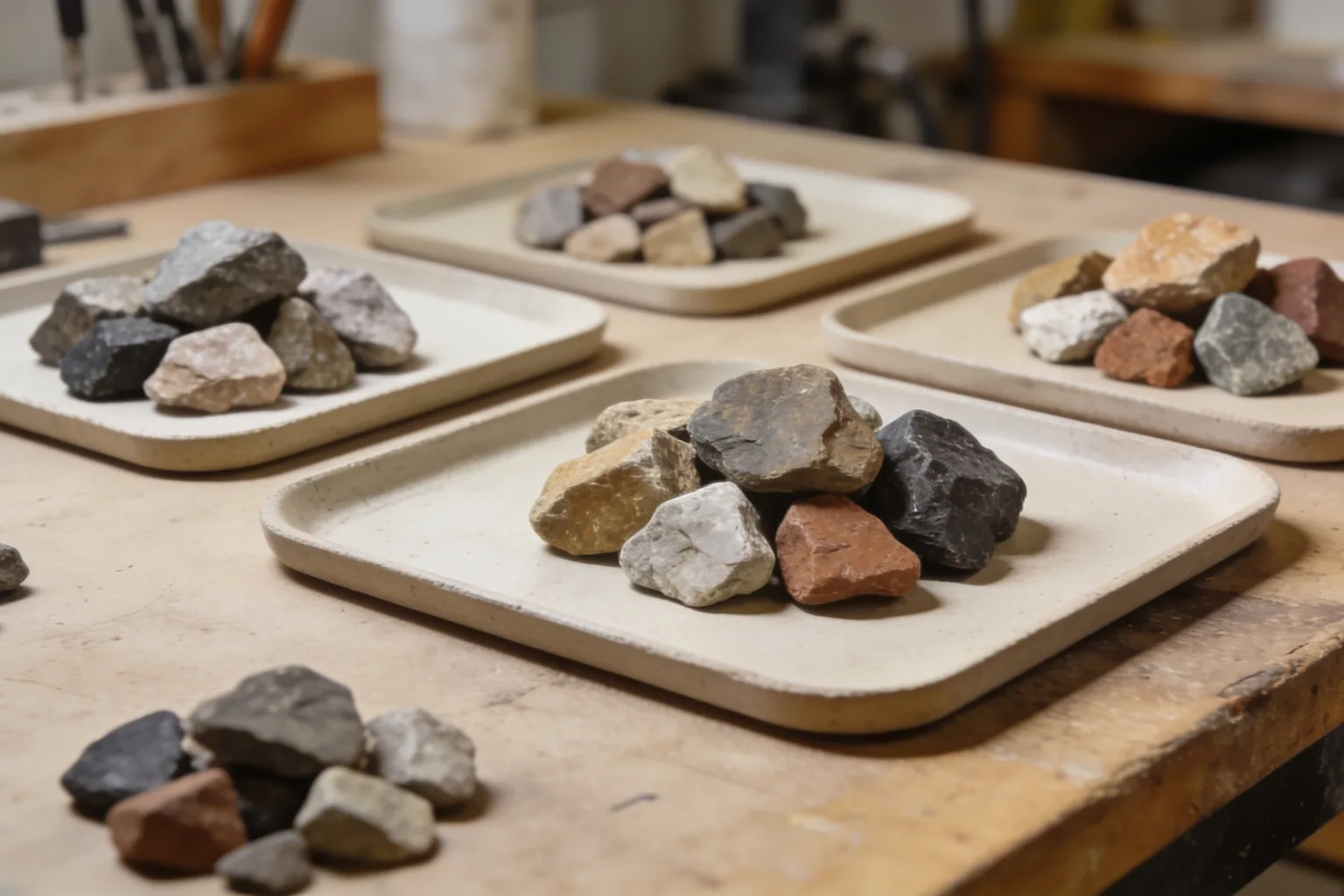
Sort rough into batches of stones with similar expected hardness before loading the barrel. Softer pieces can wear away while harder ones still need shaping, so scratch checks should guide comparisons, not assign exact Mohs numbers.
After sorting your rough, compare tumbler options suited to polishing agate. Compare rock tumblers for polishing agate.
Sort your rough into compatible batches
Use scratch checks as estimates, then label uncertain stones separately.
Step 1 Separate known types and inspect
- Sort stones by material you can identify, keeping unidentified pieces in their own group.
- Look for veins, bands, cracks, or patches that may differ from the rest of a stone.
Step 2 Make cautious scratch comparisons
- On an inconspicuous spot of expendable rough, compare the stone with a steel nail or quartz.
- Wipe the mark clean and look for a lasting groove, not loose powder or residue.
Step 3 Group likely close matches
- Put stones with similar expected hardness together, using about one Mohs point as a cautious beginner screening limit.
- Keep borderline stones out of a group rather than forcing a close call.
Step 4 Set uncertain stones aside
- Keep unidentified, mixed-looking, or inconclusive stones in a separate container.
- Do not assign a confident hardness number from appearance alone.
Step 5 Label each batch
- Write the material or estimated hardness range on each container.
- Keep separately sorted groups apart when loading a batch.
Result
What is the basic rule for sorting a mixed batch?
Start with stones you can identify, then compare candidates with a steel nail or quartz on expendable rough. Group likely close matches, label the batches, and set uncertain stones aside; the test gives a rough comparison, not an exact Mohs number.
What should you gather before sorting?
Gather a clean tray, labels, separate containers, and approximate references before you start. A steel nail and quartz can help you compare stones, but they do not identify a rock or establish a precise Mohs value; brush away dirt so you can inspect the surface clearly.
A steel nail is roughly Mohs 5–5.5, while quartz is roughly 7. These are reference points, not precision tools; use them only on an inconspicuous spot of expendable rough. A guide to choosing tumbling rocks describes these same approximate comparisons.
- A clean tray or work surface to keep stones from mixing
- Labels and separate containers for likely matches and uncertain pieces
- A steel nail, roughly a Mohs 5–5.5 reference, and a quartz piece, roughly a Mohs 7 reference
- A soft brush or cloth to remove dirt and wipe away test residue
Our Top Picks
How do you sort stones into compatible batches?
Sort in order: identify what you can, check for mixed areas, make cautious scratch comparisons, and group only close matches. A one-point spread is a conservative beginner screen, not a guaranteed cutoff; leave borderline and unknown pieces out of a known batch.
- Separate stones by the material you can identify. Inspect each for veins, bands, or patches that may differ in hardness. Quartz, agate, and jasper are often around Mohs 6.5–7; calcite is around 3, and obsidian around 5–5.5. These are broad examples, not shortcuts to identifying a stone.
- On an inconspicuous spot of expendable rough, compare the stone with the nail or quartz. Wipe the spot clean before judging it. A lasting groove suggests a scratch; a mark that brushes away may be residue.
- Group stones that seem close in hardness. Use about one Mohs point as a cautious beginner screen, not a guaranteed cutoff. Guides differ on the suitable spread, so separate borderline pieces rather than stretching the range.
- Put unidentified stones, mixed-looking material, and inconclusive test results in their own group. Do not treat an uncertain result as a confident hardness estimate.
- Label each container with the material or estimated range, adding an uncertain label when needed. Keep separate groups apart when loading so a known batch stays consistent.
If practice rough and a learning guide would help, the National Geographic Hobby Rock Tumbler Kit is described as including both. A published account of the kit could not identify some supplied stones, so treat unknown pieces as unknown rather than using the kit as a hardness reference.
What mistakes can undermine a hardness sort?
Color and shape do not establish hardness, and a rock name does not guarantee that every part of a stone matches. A scratch check gives a comparison, not a precise reading. Keep hardness separate from size and shape when sorting.
- Assuming a trade or rock name proves uniform hardness: inspect for veins or patches that may differ.
- Treating a scratch test as an exact Mohs measurement: use it only to compare against approximate references.
- Mixing stones across a wide hardness range because they look alike: softer pieces may wear away before harder ones are shaped.
- Using size or shape to decide hardness: sort those as separate checks instead.
What if a scratch test or identification is inconclusive?
If a result will not place a stone confidently, do not force it into a known batch. Wipe the spot clean and check for a lasting groove; a surface mark may be loose material. If the stone varies across its face, treat it as mixed or uncertain.
No clear scratch appears
The reference may not distinguish the stone, or the test spot may not give a clear result. If the rough is expendable, compare another inconspicuous spot with a known reference. If uncertainty remains, label the stone uncertain.
The mark wipes away
The mark may be powder or residue rather than a lasting groove. Brush or wipe the area clean and inspect it again. If you cannot see a groove after cleaning, do not count the mark as proof that the reference scratched the stone.
One stone has both hard- and soft-looking areas
The stone may contain different materials or a vein with different hardness. A test on one spot may not represent the whole piece, so keep it separate from a uniform batch. If you cannot identify the areas, treat the whole stone as uncertain.
Once your rough is sorted, you can compare beginner equipment options in beginner rock tumbler options if you still need to choose a tumbler.
Related guides
- Tumble-Bee TB-22 vs KomeStone K1 2026 · Tumble-Bee TB-22 vs KomeStone K1: compare barrels, included supplies, loading guidance, and listed safety features before choosing a tumbler kit.
- Why Is My Rock Tumbler Barrel Leaking? 2026 · Why is my rock tumbler barrel leaking? Stop the run, check for pressure, clean the seal, and inspect for damage before replacing any part.
- How to choose a work surface for a rock tumbler 2026 · How to choose a work surface for a rock tumbler: check fit, stability, access, noise, and your model’s placement instructions before a long run.
Frequently asked questions
Can I use a steel nail to sort rocks by hardness?
Yes, as a rough comparison reference, not a precise measuring tool. A steel nail is approximately Mohs 5–5.5, and the result depends on the reference and the spot you choose. Test only expendable rough in an inconspicuous area, then wipe away residue before judging.
How close should the Mohs hardness of rocks in one batch be?
For a cautious beginner sort, aim for stones within about one Mohs point. Treat that as a screening limit, not a universal cutoff: guides differ on the suitable spread, so keep borderline stones separate.
What should I do with a rock if I cannot identify its hardness?
Put it in a labeled uncertain group instead of guessing. A scratch test can suggest whether it falls above or below a reference, but it cannot identify every stone or reveal all mixed material. Keep it out of a known batch until you have better identification.
Can a rock with soft veins go in a batch of uniform stones?
It is safer to keep it separate. A vein or patch may wear at a different rate from the rest of the stone, so a test on one area may not represent the whole piece. If you cannot identify the vein, treat the stone as mixed or uncertain.